
Value Investor Digest – Issue 53 April 2021 In the 53rd issue of Value Investor Digest we feature our interview with Charles Heenan and Geoff Legg from Kennox Asset Management.
The issue also features the Berkshire Hathaway Annual Shareholders Meeting plus other articles, videos, podcasts and letters from Matt McLennan, Michael Mauboussin, Jeremy Grantham, David Einhorn, Joel Greenblatt, Rich Pzena, Li Lu, William Green, Bill Miller, Ted Seides and Nick Kirrage.
Next week we will also be releasing our latest interview with Andrew Wellington from Lyrical Asset Management. Berkshire Hathaway Meeting Livestream – Saturday, May 1st
The Berkshire Hathaway Annual Shareholders Meeting will be streamed live on Yahoo! Finance on Saturday May 1st from 12.30pm ET. If you can’t watch live tomorrow then you can also watch on demand at the same link for 30 days after the event. (Livestream link) 

 VID Interview with Kennox
“CAPE for the US is on about 35x. Markets are incredibly expensive just at the moment. By comparison we are happy to pay up to around 12x our sustainable earnings number so a very steep discount to what the market is charging…Because we are paying such frugal prices, we are typically looking at companies facing headwinds, often on depressed earnings. What we want to do is be able to pick up those companies when they are trading at very advantageous valuations…and benefit from those headwinds over time turning to tailwinds. What very often happens when you get that swing from headwinds to tailwinds is that you do get a growth in those earnings accompanied by a rerating of the business as well. That combination can be very powerful.”
Matt McLennan Interview in Barron’s (Free to View)
“I’m torn at the moment. On the one hand, we’re recovering from a deep cyclical trough, and that’s usually a good time to be an investor. On the other hand, prices aren’t that attractive, and we have all these secular issues…Markets will also have to move beyond the focus on fiscal stimulus to ‘How are we going to pay for all this?’ And we’re going to see the emergence of a new regulatory architecture, which isn’t likely to be any more business-friendly. Inflation expectations have also moved up quite a bit, and what happens if inflation rises more than people expect? These are all issues that can weigh on the market as we roll forward.”
Morgan Stanley: Market-Expected Return on Investment (co-authored by Michael Mauboussin)
“This report breaks new ground by connecting valuation (MEROI) and accounting (properly measuring intangible investment)…This report seeks to help executives and investors in three ways. First, we describe market-expected return on investment, which measures the return at which the present value of a company’s profits equals the present value of the investments a company makes. An understanding of MEROI allows us to understand how high the bar is set for corporate performance. Second, we note that measuring returns has become more difficult as corporate investments have shifted from being primarily tangible to intangible.”
Podcast with Jeremy Grantham: A Historic Market Bubble
“‘Don’t fight the Fed’ has had a pretty good record and has not applied to my life or GMO. We have always played value first and if the Fed wanted to be on the other side of that game for a while we would carry on regardless and eventually the great bubbles broke. We didn’t catch the top, we were painfully early but they broke and we won and we made more money on the decline than we lost on the upside.”
Aon Report: ‘Respecting the Grey Swan’
“Many extreme events are referred to commonly as Black Swans but, once investigated, are found to be Grey Swan events…Grey Swans can fly in from anywhere…sudden events that threaten significantly the reputation of a company. The analysis builds on research conducted over 30 years and is based on data drawn from Pentland Analytics’ Reputation Crisis Databank that includes currently 300 corporate reputation crises spanning the last four decades. The data are global and all major industry sectors are represented. The analysis will demonstrate that the impact of Grey Swan events on shareholder value is significant and sustained.”
David Einhorn Greenlight Capital Q1 2021 Letter
“As for the Fed, it fundamentally changed its framework last August. It no longer seems to care that monetary policy works with a lag. Actually, it has embraced an asymmetrical inflation policy: The Fed wants to be ahead of the curve on the downside to protect the stock market and corporate bondholders the economy. Behind the curve is fine on the way up no matter how frothy the stock market the recovery is. Now, it says it is only going to react to actual inflation that exceeds its 2% target for a period of time.“
Joel Greenblatt and Rich Pzena Interview
“Value investing is valuing a business like you’re a private equity firm buying the whole business – and what they care about is cashflows and future cashflows and what are the risks of receiving them down the road – and what are you paying for them.”
Behavioural Investment: Why Should Equities Be Fairly Valued?
“It is not that investors are using identical information but coming up with different answers; it is that they are using information for entirely different purposes. If investors are making decisions based on price momentum, multiple expansion, monetary policy, fiscal stimulus or simply adopting a passive approach, why should the assets in question be priced at their fair value?”
Kernow: The Best Opportunity in a Generation for UK Equities?
“As we have said many times, post-Brexit, the UK should be viewed in the eyes of the international investing community as a larger Norway or Switzerland – a nice place to do business, slightly different rules, still in Europe, just not in the EU. On top of this, we have now seen the UK roll out a world-leading vaccine plan, which should allow the UK economy to be better positioned for a successful, permanent, and quicker reopening.”
Fund of Funds Insider: You Can Win With Kids
“Why is this 28-40 age such a sweet spot for managers? It’s the threshold between having enough experience to avoid the really stupid mistakes, but still being sufficiently curious, passionate and willing to take risks. It’s we older fund managers who have bigger challenges. How do we keep our mojo once we’ve proved ourselves? Or become risk averse? Or are managing too large a fund?“
Bruce Greenwald and Li Lu Fireside Chat (April 2021)
“…if you claim a circle of competence, you have to be very honest with yourself. So we really insist on knowing inside and out a particular business to the point we’re able to predict its outcome, for example in the next ten years. At least I want to know at the worst case scenario, what the business would look like ten years from now.”
StockViews Inaugural Whitepaper: Walking a Tightrope
“This inaugural report draws on the output of our proprietary machine intelligence system, Dragonfly, which scans across 1300 companies in Europe. Dragonfly uses NLP to take unstructured datasets in the notes to the accounts and converts more than 800 data points on every company into a unique red flag system designed to spot a variety of risks that signal balance sheet stress. This allows us to form a picture of the “hidden health” of a company that isn’t simply based on “vanity metrics” like adjusted earnings growth or share price performance.”
William Green Article on Bill Miller
“I like General Motors. It used to be part of the problem, and now it’s part of the solution. It was a massive polluter and couldn’t solve its own problems. Now, that’s reversed. You’re at the cusp of the conversion of all its new cars from the internal combustion engine to electrical vehicles. But GM’s valuation has not reversed. On a sum-of-the-parts basis, you can easily come up with 50% more than the current price, and you can pretty easily come up with 100% more. They’re at eight times next year’s earnings in a market that’s 20 or so times earnings. GM is certainly not expensive, given the optionality. And people are excited about anything that combats climate change.”
Schroders: The Value Perspective Podcast with Ted Seides
“In this episode, Ted sits down with Juan and Nick to discuss what Ted has learned through his podcast’s 200+ episodes, a bet he made with Warren Buffet on hedge funds vs. S&P 500, and his views on analysing investment processes including probabilistic thinking, the importance of diversity and recognising biases.”
Ruffer Investment Review April 2021
“I take it pretty much for granted that the forty year bull market is ending, and that it will be replaced by hard investment times. I am sure it will be a period dominated by what has come to be known as financial repression – a period when the post-tax returns from assets don’t keep pace with higher inflation. Savers will endure many years of enforced declines in the value of their wealth – in real (inflation-adjusted) terms. It is through the eyes of the income owner I want to examine this phenomenon.“
There’s Nothing to Do Except Gamble: Welcome to the non-Fungible, Memeified, Cryptodenominated, Degenerate Future of Finance
“Every day, some new money weirdness crosses our feeds: teenage TikTok stars apologizing for recommending a Star Wars–themed cryptocurrency that turned out to be a scam, a longhair trader best known as DeepF**kingValue and Roaring Kitty testifying before Congress, the R&B singer Akon announcing he’s building a new city in Senegal that will operate on his proprietary cryptocurrency. Naturally, the Jack Bogle of this moment is the fratty founder of Barstool Sports, Dave Portnoy, who launched an exchange-traded meme-stock fund earlier this year…His biggest rival for meme-economy influence is Elon Musk, who has the ability to tweet a single phrase — for example, ‘Use Signal’ — and cause a defunct penny stock to rise 6,000 percent.“
|
Author: Editor
-
VID April 2021
-
VID December 2020


Issue 51 – December 2020
In the 51st issue of Value Investor Digest we feature our interview with Ronald Chan, a collection of letters from Nick Sleep, an complimentary interview from Value Investor Insight, the latest podcast from the Money Maze; plus a fantastic offer with a free London Value Investor Conference ticket if you purchase the “Forgotten Forty” report from Boyar Research.
The issue also features 10 other articles, videos and letters from GMO, Charlie Munger, Howard Marks, Charles Heenan, Russell Napier, Beltrán Parages and many others.
Complete Letters of Nomad Investment Partnership
“This is the twenty-fifth letter to investors over fourteen calendar years. In these letters we have tried to cover the philosophy and methodology Zak and I use to approach the problem of investing. We keep our discussions to as high a level as we can manage in the belief that, in the long run, the high level is all that matters. In these letters we have therefore discussed business models, incentive compensation, capital allocation, mistakes, more mistakes, even more mistakes, lots on psychology and how to think, lots on attitude and so on.”
FT ARTICLE + LINK TO LETTERS
Interview with Ronald Chan
“These days we are doing a lot more than just picking stocks but actually interacting with a lot of these names to unlock and create value on behalf of shareholders. There is an infrastructure conglomerate in Hong Kong called New World Strategic which is a subsidiary of New World Development…it is now trading at a 50% discount to NAV, pays over 9% dividend yield – but unfortunately it is in a lot of the businesses that you don’t want to be in right now…they have aircraft leasing, toll roads, logistics…However, last year the company made an investment in an insurance company and they are now in the process of getting a licence to sell insurance in the Greater Bay Area…the average insurance premium per capita in Hong Kong is around 7,000 USD but in the Greater Bay Area the insurance premium per capita is approximately 550 USD per capita.”
WATCH INTERVIEW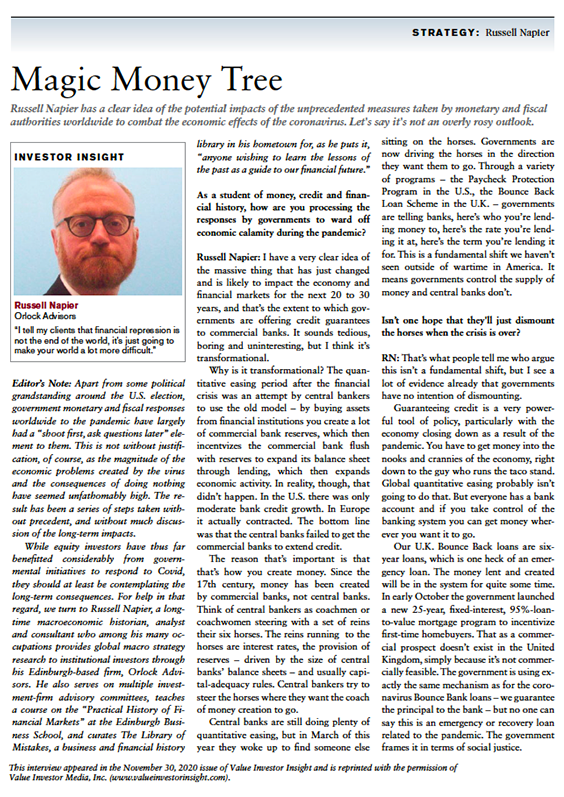
Value Investor Insight: Russell Napier Interview
With thanks to our friends at the excellent publication Value Investor Insight we are delighted to be able to include a reprint of this excellent interview with Russell Napier. “I have a very clear idea of the massive thing that has just changed and is likely to impact the economy and financial markets for the next 20 to 30 years, and that’s the extent to which governments are offering credit guarantees to commercial banks. It sounds tedious, boring and uninteresting, but I think it’s transformational.”
READ MOREInterview with Charlie Munger at Caltech (December 2020)
“There have been huge booms and huge busts and that has been very interesting and of course the government has tried to do things that will dampen down the fluctuations and make recoveries from the busts happen faster…what has happened in the investment field is of course that so many people have gone in to it and people have made so much money and it is driven an almost frenzy of activity in the investment field – when I was young there was practically nobody in it and they weren’t very smart and now almost everybody is smart and a good proportion of them are sucked in to finance by the money. That has been a hugely important development. I don’t welcome it myself at all – I don’t think we want the whole world trying to get rich by outsmarting the rest of the world in marketable securities.”
WATCH INTERVIEWBoyar Research: Complimentary Report plus free LVIC ticket with a Purchase of “The Forgotten Forty 2020”
The excellent Forgotten Forty which has now been published each year for over two decades consists of 40 one-page reports highlighting the investment thesis for each company. The reports focus on specific catalysts that Boyar Research believe could make each stock appreciate in value over the next 12 months. With thanks to our friends at Boyar Research you can get a complimentary report by signing up below plus if you choose to purchase the Fortgotten Forty, Boyar Research will purchase you a ticket to attend the London Value Investor Conference in 2021 or 2022.
COMPLIMENTARY FF REPORTS + FORGOTTEN FORTY PURCHASE LINKGMO – Value: If Not Now, When?
“After a very difficult 2020, U.S. Value – as GMO defines it – now trades at the fourth percentile of relative valuation on the blend of metrics that we generally use to evaluate the group’s attractiveness. You might object that this is a non-standard definition of Value, and if cheap stocks were chosen using some other metric they might look less interesting. To address this concern, we can analyze how attractive the cheapest half of the U.S. looks when built on 11 different metrics, including GMO’s proprietary “P/Scale.”
READ MORECharles Heenan of Kennox: Interview with Russell Napier
“The government controls the supply of money and Boris’ 25 year mortgage he will now be offering through the banking system tells us that this is not a policy that is just for the coronavirus emergency or recovery – it is also morphing in to social justice and it can clearly morph in to loans for green initiatives as well. All of this creates money when it is done through the banking system. It is not fiscal policy it is monetary policy and the conclusion from that is that when the government controls the supply of money you’re going to get more inflation.”
WATCH INTERVIEWBeltrán Parages of azValor: Interview with Estrategias de Inversion
“In our case, we deeply trust in the companies in which we are shareholders. Numbers are extraordinary and historically attractive even compared to those of 2009, which is an example of a past opportunity we have already come through. In Azvalor International’s portfolio, the companies are offering average returns over 15%, and therefore we believe the fund will tend to converge to those returns from the present moment (as it happened in 2009 and during the following 5 years).”
READ MOREBehavioural Lessons from 2020
“Making predictions about financial markets is one of those activities that we perform in an indefatigable fashion in the face of overwhelming evidence that it is a hopeless endeavour; perhaps because it is in none of our interests to state that we just don’t know. We should never make our investment outcomes reliant on heroic forecasts.”
READ MORE10 (More) Questions ESG Investors Must Consider
“The sheer pace of the move toward ESG and sustainable investment approaches means that it is often difficult to take time to reflect on some of the most pressing questions. I previously discussed 10 critical issues ESG investors must consider and, such is the scale and importance of the shift taking place, I now have ten more.”
READ MOREThe Howard Marks Investor Series at The Wharton School: A Conversation with Howard Marks (December 21st 2020)
“Let’s say you and I agreed that over the next five years every penny that went in to the US stock market would go in to an S&P index fund. What does that mean? That means over those 5 years the 500 stocks in the S&P would become massively expensive as they received all the cash flows, the other stocks in the market would become massively cheap because they were starved of capital, nobody was buying them. Eventually however, the non-S&P stocks would be so cheap relative to the S&P stocks that their outperformance would become compelling, at some point – we just don’t know where that inflection point is.”
WATCH VIDEOFT: Why Value Investing Still Works in Markets
“To buy something for less than it is worth is as useful as ever…many investors and market observers still unfortunately conflate value investing with the value factor. Value investing is buying something for less than it is worth. The value factor is an ersatz measure of gaps between price and value. Worse, the relevance of the value factor is fading. Earnings and book value no longer mean what they used to.”
READ MOREThe Money Maze Podcast: Chingxiao Shao
“Today our investment philosophy is very simple and repeatable: we invest in quality-growth companies, we invest with conviction together with our clients at a reasonable price. Basically investing in the companies that can really ride through the different economic cycles. Companies that have consistent future earnings growth, generate free cash flows, companies that have very strong competitive advantages that are difficult to replicate and companies that have honest and reliable management teams.”
LISTEN TO PODCASTGoldman Sachs’ Currie Predicts ‘Long-Lasting Bull Market’ for Virtually all Commodities
“Policy-driven demand is going to create a capex cycle that is bigger than the BRICS in the 2000s, not quite as big as the ’70s, but we’re talking about that kind of a bull market in commodities.”
READ MORE
Quote of the Issue – VID 51 (from our collection of investment quotes)
“The wise investor can profit if he can think independently of the crowd and reach the rich answer when the majority of financial opinion is leaning the other way.”
Phillip Fisher
Copyright © 2020 Value Investor Limited, All rights reserved.
Value Investor Limited
7th Floor, Vantage London Great West Road London, TW8 9AG
-
VID February 2021

Value Investor Digest – Issue 52
February 2021
In the 52nd issue of Value Investor Digest we feature our interview with
Petra Capital Management.
The issue also features other articles, videos and letters from Michael Mauboussin, Lindsell Train, Greenlight Capital, Gotham Capital, GMO, Oaktree Capital, Bronte Capital, Brown Advisory, Benedict Evans, Third Point, The Money Maze Podcast, Barron’s and others – plus a Telegraph interview with Neil Woodford announcing his return.


Value Investor Digest Interview with Petra Capital Management
“Despite the pandemic Petra had its best year ever in 2020 in terms of fund performance [up more than 60%]. I think we did very well last year primarily because we owned many stocks in our portfolio whose businesses were very competitive and predisposed to benefit from the ongoing economic trends. In addition our portfolio companies had strong balance sheets which means they were less vulnerable to the economic downturn. But more importantly we had bought these stocks several years ago at a cheap prices…the Korean stock market had been exceptionally cheap for many years as it moved sideways for 5 years prior to 2020.“
WATCH INTERVIEWYahoo Finance to Stream Daily Journal Annual Meeting Featuring Charlie Munger on Feb 24th
“We won’t be able to join each other in person this year, but I hope that many shareholders will join our annual meeting online.” Questions can be submitted to DailyJournalQuestions@yahoofinance.com by 8 p.m. ET on Feb. 15.
Michael Mauboussin FT Article: How the Parting of Two Market Forces Helped Spur the Equity Rally
“The interplay of two forces that drive valuations, the cost of capital and the volatility of markets, might explain some of that counterintuitive behaviour…The cost of capital and volatility are likely to converge as we pass through this episode. But the pandemic caused actions and reactions with remarkable implications for valuation.”
Lindsell Train Investment Insights: Rational Numbers
“As Durand warned over 60 years ago, ‘With growth stocks, the uncritical use of conventional discount formulas is particularly likely to be hazardous; for, as we have seen, growth stocks represent the ultimate in investments of long duration. Likewise, they seem to represent the ultimate in difficulty of evaluation. The very fact that the Petersburg Problem has not yielded a unique and generally acceptable solution to more than 200 years of attack by some of the world’s great intellects suggests, indeed, that the growth-stock problem offers no great hope of a satisfactory solution.’ The paradox has many putative ‘solutions’, but in essence each requires the problem to be reframed and hence rationally bounded in some way. Consequently, any realistic growth stock valuation attempt rests on some such compromise. The problem is that these necessary choices are often arbitrary yet dramatically affect the result. But whilst precise prices might elude us, it seems clear that genuinely long-duration high-growth stocks like Pepsi’s both exist and are worth considerably more than reckonable via traditional techniques. Hence, to resolve approximate valuations far above the conventionally correct market levels seems to me to be both plausible and entirely rational.”
Jeremy Grantham, GMO: Waiting for the Last Dance
“In 1929, to be a bear was to risk physical attack and guarantee character assassination. For us, 1999 was the only experience we have had of clients reacting as if we were deliberately and maliciously depriving them of gains. In comparison, 2008 was nothing. But in the last few months the hostile tone has been rapidly ratcheting up. The irony for bears though is that it’s exactly what we want to hear. It’s a classic precursor of the ultimate break; together with stocks rising, not for their fundamentals, but simply because they are rising.”
Interview with Joel Greenblatt and Howard Marks
“In my most recent memo I did mention that never before has it been more acceptable to be unprofitable. When we started [in this business], the fact that a company lost money would pretty much put it off-limits and today it’s not a problem for anybody – and people are lined up to invest in companies that are unprofitable.” (These comments from 7.15)
Howard Marks Memo: Something of Value
“The two approaches – value and growth – have divided the investment world for the last 50 years. They’ve not only become schools of investing thought, but also labels to differentiate products, managers and organizations. Based on this distinction, a persistent scoreboard is maintained measuring the performance of one camp against the other. Today it shows that the performance of value investing lagged that of growth investing over the past decade-plus (and massively so in 2020), leading some to declare value investing permanently dead while others assert that its great resurgence is just around the corner. My belief, especially after some deep reflection over the past year – prompted by my conversations with Andrew – is that the two should never have been viewed as mutually exclusive to begin with.”
David Einhorn, Greenlight Capital Q4 2020 Letter
“If you’re invested in a collection of people that you think are absolutely at the world-class peak of what they’re doing in all of these different areas – but you sit on top of that and you look down through it – the signals you can get from that are really quite extraordinary…you can get the micro-trends that are coming up and add them up to a wonderful picture of actually that’s going on in the world and where things are overheating or not.“
Money Maze Podcast: Jack Edmondson from Oxford University Endowment Management
“If you’re invested in a collection of people that you think are absolutely at the world-class peak of what they’re doing in all of these different areas – but you sit on top of that and you look down through it – the signals you can get from that are really quite extraordinary…you can get the micro-trends that are coming up and add them up to a wonderful picture of actually that’s going on in the world and where things are overheating or not.“
Dan Loeb, Third Point Q4 Letter
“The recent short squeeze in certain securities is nothing new. Indeed, as Jesse Livermore said in Reminiscences of a Stock Operator, (quoting Ecclesiastes), in investing, ‘there is nothing new under the sun.’ As targeted securities have started to come back to earth, wiping out fortunes on the way down as they did on the way up, we can see that this was a bubble no different than other manias over time, going back to the Dutch Tulip Bulb Mania in the 17th century. What is different today, however, is the rapidity of the rise and collapse of bubbles, fueled by retail trading platforms and social media. Large short interests were also an accelerant in this conflagration.”
Zer0es: Jules Hull from StockViews
“If you piece it all together you’ve got a business [TUI] that on an EV basis doesn’t look like it should have any equity value. On a freecashflow to equity type analysis you struggle to understand how you could value it at much more than maybe 10x or so which would probably lead you to 60-70% downside from here – but that equity freecashflow you’re getting is a tiny slither with very little room for error. So to us it feels like something where you’re really walking a tightrope and anything that could potentially go wrong could tip you over.”
‘Digital Tulip’ or New Asset Class? Bitcoin’s Bid to go Mainstream
“The cryptocurrency’s embrace by Elon Musk and America’s oldest bank suggests it is starting to win institutional acceptance…’We are potentially at the birth of a new asset class,’ argues Duncan MacInnes, a fund manager at Ruffer, a traditional, conservative UK investment group that raised eyebrows when it placed a $600m bet on bitcoin last year. ‘Bitcoin is emerging from the shadows, being co-opted by establishment institutions and becoming a legitimate alternative asset for investment portfolios.’”
Merryn Somerset-Webb: Reddit Investors’ Real Power is Over Wall Street’s Future Behaviour
“As a way to shift wealth, it is equally useless. At some point, fundamentals-based valuations will reassert themselves and the many small investors left in the game will lose a terrifying amount of money. I have no idea what GameStop is worth but I know that, unless the share price is a hyperinflation canary, it most certainly isn’t $13.5bn. Pushing up the price can’t change the value.”
Barron’s: The ‘Growth vs. Value’ Stock Dichotomy Is False
“It’s just semantics, it doesn’t matter—except that it does…because everyone is driving portfolio analysis along this divide…ValuAnalysis identified the long-term real return of equity as between 5% and 6%, and there is an inverse relationship between the price multiple and the cost of capital in a static model. So, all else being equal, that means that no-to-low-growth companies will converge at an earnings multiple of between 17x and 20x, which are the inverse of 5% and 6%.”
Seth Klarman’s Baupost Bought $900 Million Stake in Intel
“Seth Klarman’s Baupost Group bought a $900 million stake in Intel Corp. in the fourth quarter as the chipmaker’s shares were tumbling.”
European Travel May Be Suffering Now. But Ryanair Stock Has a ‘Moat and Battering Ram’
“Ryanair said on Monday that it had added orders for another 75 Boeing MAX aircraft, taking its total to 210 planes…Ryanair aims to take delivery of 24 new MAX planes before the peak summer travel season. The aircraft is a ‘gamechanger’ the airline said. Indeed, the economics look favorable. Ryanair CEO Michael O’Leary pointed out that the MAX has 4% more seating but burns 14% less fuel than comparable, older planes. That ‘will give us materially lower operating costs going forward for the next four or five years.’”
Ignoring Energy Transition Realities
“Green energy Special Purpose Acquisition Vehicles (SPACs) are also a troubling sign. Green SPACs have raised $40 bn in 2020 alone with a mandate to acquire as-of-yet unidentified clean energy assets. Oil and gas exploration and production companies on the other hand raised only $5.2 bn in 2020 to develop their existing proven asset bases. Given how challenging clean energy product development can be, we fear the bulk of these green SPACs will likely end up being written off entirely.”
John Hempton, Bronte Capital Letter
“In these months some fund managers we admire have had solid double-digit returns. Also, some fund managers we think are gunslingers destined to drop 80 percent or more have had double digit returns (with triple-digit returns a possibility). This – despite what the averages say – is an aggressive melt-up market.“
Benedict Evans Presentation: The Great Unbundling
“Covid brought shock and a lot of broken habits to tech, but mostly, it accelerates everything that was already changing. 20 trillion dollars of retail, brands, TV and advertising is being overturned, and software is remaking everything from cars to pharma. Meanwhile, China has more smartphone users than Europe and the USA combined, and India is close behind – technology and innovation will be much more widely spread. For that and lots of other reasons, tech is becoming a regulated industry, but if we step over the slogans, what does that actually mean? Tech is entering its second 50 years.”
Ted Seides Interviews Mick Dillon of Brown Advisory
“As soon as you take the conversation from price to value now you’re selling something really powerful to people. So for us, every time we’re looking [at a company] we call it ‘superior customer outcome’ and we go about trying to work out how this works. The reason for that is that it leads to what we want as a shareholder. The shareholder is always the last person who gets paid – [if] you look down the cashflow statement or the P&L the last person who gets paid is always the equity holder: the employees get paid, the suppliers get paid, the taxman gets paid – we’re last. So if we want a high ROIC that’s going to compound over a long period of time we need that customer to be happy, to come back, to pay for value and to do it for an extended period of time.”
Neil Woodford to Launch Comeback Firm
“We’re going to rebuild the Woodford investment operation under a new brand called WCM Partners [Woodford Capital Management]. We’re going to focus on the biotech sector, British biosciences and healthcare, doing the sorts of things that we’ve done before, doing the sorts of things that have developed into the likes of Immunocore, Kymab, Synairgen, Nanopore.”
 The Value Invest Team
Value Investor LimitedUK: +44 (0) 207 193 2545 | US: +1 646 863 6099 | contact@valueinvest.com
7th Floor, Vantage West, Great West Road, London, TW8 9AG
valueinvest.com/london | valueinvest.com/newyork | qualitygrowthinvestor.comThis email is private and confidential and may contain information which is privileged and protected from disclosure. If you have received this email in error, please notify the sender and delete it from your system. Email communications are not secure and therefore the Company does not accept legal responsibility for the contents of this email. Any opinions expressed in this email are solely those of the author and do not represent those of the Company. If verification of the contents of this email is required, please request a hard copy version from the appropriate person. Emails to and from the Company may be monitored for operational reasons. Although the Company operates anti-virus scanning systems, it does not accept responsibility for any damage caused by attachments transmitted with this email. This email is private and confidential and may contain information which is privileged and protected from disclosure. If you have received this email in error, please notify the sender and delete it from your system. Email communications are not secure and therefore the Company does not accept legal responsibility for the contents of this email. Any opinions expressed in this email are solely those of the author and do not represent those of the Company. If verification of the contents of this email is required, please request a hard copy version from the appropriate person. Emails to and from the Company may be monitored for operational reasons. Although the Company operates anti-virus scanning systems, it does not accept responsibility for any damage caused by attachments transmitted with this email.
-
VID November 2020


Issue 50 – November 2020
In the 50th issue of Value Investor Digest we feature both our interview last week with David Samra from Artisan Partners and also access to the replay of the fantastic Female Manager Summit which took place recently.
The issue also features 10 other articles and letters from Greenlight Capital, MITIMCo, Kopernik, Schroders and many others.
David Samra Interview
The latest VID interview with Artisan Partners includes stock ideas on Ryanair and Samsung Electronics. “There are second derivative outcomes of all these changes that you need to think through in terms of what might benefit a company and what might hurt another type of business and then you have to make sure that your valuations reflect that…I think everybody has seen the first derivative outcomes and share prices have reacted – the question is what are the second and third derivative outcomes and where in your portfolio are you exposed to the point where as those start to exhibit themselves can you generate a return from those.”
VIEW VID INTERVIEW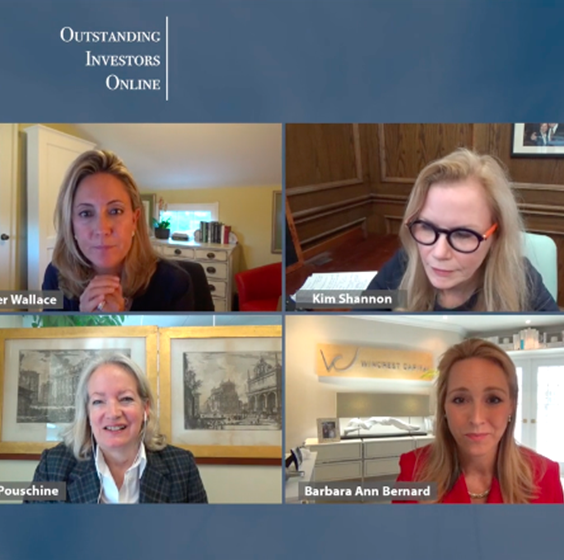
Female Manager Summit
A replay of the Female Manager Summit is now available. It featured Jennifer Wallace, Tania Pouschine, Kim Shannon and Barbara Ann Bernard and was Moderated by Hyde Hsu and Harry Holzer from Willis Towers Watson. A wide range of topics were discussed plus in-depth stock ideas were given by the managers.
VIEW SUMMIT REPLAYGreenlight Capital Q3 2020 Letter
“There are many anecdotes of toppy behavior. We will share one: We recently received a job application with the email subject, ‘I am young, but good at investments’ from a 13-year-old who purports to have quadrupled his money since February…Bubbles tend to topple under their own weight. Everybody is in. The last short has covered. The last buyer has bought (or bought massive amounts of weekly calls). The decline starts and the psychology shifts from greed to complacency to worry to panic. Our working hypothesis, which might be disproven, is that September 2, 2020 was the top and the bubble has already popped.”
READ MOREThe Sharpe Ratio Broke Investors’ Brains
“This whole debate centers on what to use as a measure of risk, but William Sharpe never claimed it should be volatility. The Sharpe ratio was originally called ‘reward-to-variability’ because volatility is not an identity for, nor an analogy to, risk…He never designed it to certify the future performance of investments. Past Sharpe ratios are not indicative of future Sharpe ratios.”
READ MORESounding Good or Doing Good? A Skeptical Look at ESG
“Even if you overlook disagreements on ESG as growing pains, there is one more component that adds noise to the mix and that is the direction of causality: Do companies perform better because they are socially conscious (good) companies, or do companies that are doing well find it easier to do good?”
READ MOREKopernik Perspectives: Mining
“This white paper explains how we value mining companies and why we currently prefer to own the mining companies, risks attached, instead of the physical commodities. We believe that a position that says ‘never’ and ‘absolutely not’ to investing in a security is not well thought out. Pertaining to mining companies today, we see this binary thought process in the extreme—an extreme that we are taking advantage of.”
VIEW WHITE PAPERInvestment Thinking Episode 28 – Interview with Nick Kirrage of Schroders
“We really believe in this, we believe in it more than ever today. We think the opportunity is, well statistically you could say the best in 100 years for what we do and the question is ‘where might we not be getting it?’…there are these changes and a lot of them could be quite disruptive to what we do but at the end of the day value investing comes down to, as with any investing style, it is not just ‘it has worked’ but ‘why does it work?’ Because if you can work out the ‘why’ you can work out whether you think it will continue to work going forward.”
LISTEN TO PODCASTWSJ: Value Stocks May Have Done a Lot Better Than You Think
“When using the traditional definition, as you can see from the accompanying chart, value hit its peak relative to growth in December 2006. When including intangibles, that peak came in December 2016, 10 years later.”
READ MOREThe Economist: Does Value Investing Still Work?
“For almost a century the dominant ideology in finance has been value investing. It has evolved over time but typically takes a conservative view of firms, placing more weight on their assets, cashflows and record, and less on their investment plans or trajectory. The creed has its roots in the 1930s and 1940s, when Benjamin Graham argued that investors needed to move on from the pre-1914 era, during which capital markets were dominated by railway bonds and insider-dealing.”
READ MOREJonathan Boyar Interview with David Rubenstein
This interesting interview discusses how Zoom and other technologies will change how we conduct business going forward, David’s views on how the pandemic has impacted the global economy, how the private equity world is changing in terms of the types of deals they are doing, how The Carlyle Group almost went out of business early in the firm’s existence, key qualities of effective leadership from interviews with many of the world’s most accomplished leaders including: Justice Ruth Bader Ginsburg, Dr. Anthony Fauci, Jamie Dimon, President Bill Clinton, President George W. Bush and more.
LISTEN TO PODCASTMITIMCo: In Manager Selection, Conventional Rules of Thumb are Dumb
“Below are some of the many silly rules of thumb we see used to the detriment of thoughtful manager selection. We have worked hard to train ourselves to be ‘organizationally allergic’ to these and anything that resembles them.”
READ MOREDavid Baran: Japan’s Problems with Shareholder Voting Underscores Need for Reform
“Despite the improvements in Japanese corporate governance, investors like Symphony have warned repeatedly that more needs to be done. Some day soon there will be a hostile proxy battle in which the failure to count votes thwarts the outcome shareholders prefer. Prime Minister Yoshihide Suga should make it part of his push for digitalisation. It is time to tackle this problem for the benefit of all shareholders in Japan.”
READ MOREA Fund Manager’s Time Horizon is the Shortest Common Denominator
“If investors have the ability to freely withdraw money from a fund and are focused on monthly performance figures, then the fact that the investment approach is designed to take a five year view becomes almost an irrelevance. Short-term numbers matter…So many professional fund managers extol the virtues of adopting a long-term approach, but how many are in a position or environment that allows their words to be validated by their actions? The structure of influence and incentives within the industry make it increasingly difficult to achieve.”
READ MORE
Quote of the Issue – VID 50 (from our collection of investment quotes)
“Cash combined with courage in a time of crisis is priceless.”
Warren Buffett

-
VID September 2020
Issue 49 – September 2020
The September edition of VID features a Value Investor Digest interview with Edouard Mercier and Jean-Charles Tisserand of Ascender Capital who discuss Proto Corp and KEPCO subsidiary KPS. The issue also features other articles and videos including a Ruffer webcast, a Michael Mauboussin podcast, an article from James Montier of GMO, Seth Klarman’s Baupost letter plus 10 other articles.
VID Interview: Ascender Capital
“Another good example is Proto Corp. Proto Corp is a classifieds business which specialises in the sale of used cars in Japan. The car sales market is quite specific in Japan in the way that the proportion of new cars is 3x as high as it is in Western countries and a lot of used cars are scrapped – making the second hand market relatively small in comparison to what it is in the UK, for example. Proto Corp is a dominant player with a 40% market share – it is operating effectively in a duopoly…It currently trades at 4-5x EBIT and a PE of less than 10x.”
View VID Interview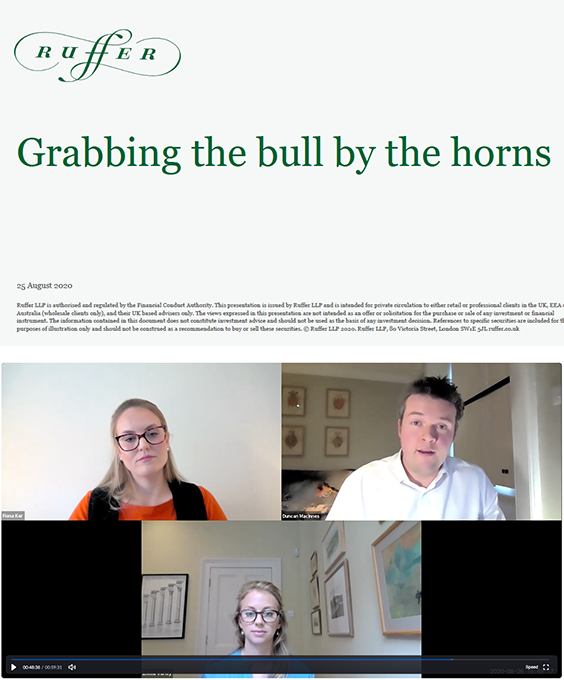
Ruffer Zoom Replay: “Grabbing the Bull by the Horns”
“With Land Securities, for example, you could assume that all of their retail properties are worth nothing. You could assume they negotiate lower rents to compromise with all of their tenants – by 20 odd percent – and the stock would still comfortably yield 3 or 4%.”
(Password is Ruffer2020! and the link expires 25th September) VIEW VIDEO + SLIDE DECKJames Montier: Reason’s Not To Be Cheerful
“The U.S. stock market looks increasingly like the hapless Wile E. Coyote, running off the edge of a cliff in pursuit of the pesky Roadrunner but not yet realizing the ground beneath his feet had run out some time ago. Investing is always about making decisions under a cloud of uncertainty. It is how one deals with the uncertainty that distinguishes the long-term value-based investor from the rest. Rather than acting as if the uncertainty doesn’t exist (the current fad), the value investor embraces it and demands a margin of safety to reflect the unknown. There is no margin of safety in the pricing of U.S. stocks today.”
Read moreSeth Klarman – Baupost Q2 Letter
“Before the pandemic struck, retail properties in the U.S. were already under threat. The U.S. had become over-stored – the country had four times more retail real estate per capita than Europe. Online shopping has been growing by double-digit percentages every year since 2009, taking market share from brick and mortar retail.”
Read moreMichael Mauboussin – Great Migration: Public to Private Equity
“We know a lot of investments that are made are intangible. The key from a valuation point of view is they typically show up on the income statement. One task would be for us to take that off the income statement and put it on the balance sheet. There was a paper that came out in Management Science…they said hey, maybe we should segregate S,G&A in to a component that’s maintenance, the S,G&A we need to run the business, and investment S,G&A – and they use that technique and they go back to 1970 and they demonstrate that there’s been this huge upswing in intangible investments. When people lament that companies aren’t investing anymore and they’re hollowing out their businesses and using the money to buy back stock and so forth, they’re missing a huge component of this which is intangible investments – and if you reckon for that not only have investments not gone down, they’ve actually gone up quite materially.”
Listen to Podcast + Morgan Stanley ReportMonetary Policy Gone Wild: A Lost Generation of US Growth?
“The duct tape holding the façade together today is 2021 earnings estimates off of which markets are theoretically trading. Investors are looking past a full year of a bloodletting at the bottom line and that’s a best-case scenario. For context, in 2008, there was no shutdown of the US economy and earnings fell 69%. In the 2015–2016 industrial recession, S&P 500 earnings slumped by 15%. All things considered, it’s fantastical to accept that full year 2020 earnings will only be down 21.5%.”
Read moreDid Buffett Really Change His Mind on Gold?
“They’ve bought a gold mining equity, which, to me, is entirely consistent with their mandate. It’s not surprising to me that they’d buy a gold mining company.”
Listen to PodcastVisual Capitalist: The Most Popular Websites Since 1993
This fascinating video-chart provides a historical rundown of the most popular websites since 1993, showing how much the internet has evolved since the early ’90s.
Watch Video-ChartStockViews: Managing Portfolio Risk in the “Golden Age of Fraud”
“A decade long, central bank driven, bull market (pre-Covid) along with high levels of retail participation, Silicon Valley’s fake-it-till-you-make-it approach, Trumpian post-truth #fakenews and lax regulation led famed investor Jim Chanos to recently opine during an FT interview that the current point in time is: “a golden age for fraud [and] a really fertile field for people to play fast and loose with the truth, and for corporate wrongdoers to get away with it for a long time.”
Read morePowell’s Three-Wheeler Doesn’t Need a Speed Limit
“By the same token, the Fed’s announcement that it will let inflation go a bit above 2% if necessary sounds like wishful thinking…the fed’s announcement that it might let the economy “run hot” and allow inflation to hit 3% or more looks about as relevant as a 100mph speed limit would be for Reliant Robin drivers.”
Read moreKopernik Perspective: Are Uranium Stocks Radioactive?
“The uncertainties with respect to secondary supply, and slow changes in this market, makes the timing of any uranium price recovery uncertain. However, we believe that over the long term the price will need to get to the incentive cost of bringing on new capacity unless we are way off in our demand outlook. This incentive cost is probably in the range of $60-90 per pound of U3O8 and we would not quibble with any estimate within this range. With spot prices in the $30s, this suggests that there is way more upside than downside in the commodity.”
Read moreI Can’t Believe I’m Saying This, But I’m Passing on Seth Klarman
“We’re walking away,’ says one capital allocator…Seth is running Baupost more like a wealthy person might run their personal money than like the aggressive hedge fund manager that he’s been over the years…He has pretty considerable net worth and all of his money invested in that firm. Other people’s fees are paying for him to run his personal money. If you want to come along, come along.”
Read moreRay Dalio: Long-Term Debt Cycle
“To review, in the long-term debt cycle, holding debt as an asset that provides interest is typically rewarding early in the cycle when there isn’t a lot of debt outstanding, but holding debt late in the cycle when there is a lot of it outstanding and it is closer to being defaulted on or devalued is risky relative to the interest rate being given. So, holding debt (e.g., bonds) is a bit like holding a ticking time bomb that rewards you while it’s still ticking and blows you up when it goes off. And as we’ve seen, that big blowup (i.e., big default or big devaluation) happens something like once every 50 to 75 years.”
Read moreA Robot Tried to Fix Value Investing and Ended Up Buying Amazon
“It’s the rallying cry for many remaining proponents of value: The factor isn’t dead, it’s simply plagued by outdated accounting rules that treat intangible investments such as research as expenses rather than capital. As a result, knowledge-intensive firms end up with much lower book values and higher costs, which make them look more expensive than they actually are.”
Read moreFT: Goodbye to the ‘Pret Economy’ and Good Luck to Whatever Replaces It
“Pret’s branches are now ubiquitous in the capital city. There are as many on London’s Borough High Street as there are in Wales. The rise of Pret has mirrored the rise of London and, until recently, they both seemed unstoppable.”
Read moreGQG Partners: (Still) Waiting for Mean Reversion
“Again, if you cannot outperform on the upside, and cannot hold up on the downside, what is the purpose of the exposure? In our view, this seems like something is fundamentally broken. However, hope springs eternal, and just as time heals all wounds, maybe if enough time passes, value will reassert itself. After all, it is not as if mean reversion is an unknown phenomenon.”
Read moreQuote of the Issue – VID 49 (from our collection of investment quotes)
“Cash combined with courage in a time of crisis is priceless.”
Warren Buffett
-
VID January 2020
WELCOME TO THE 44th EDITION OF VALUE INVESTOR DIGEST
In this issue we feature an FT article on the efficient markets hypothesis turning 50, Fundsmiths annual letter, a video from VINY with Howard Marks, an FT article on Hedge Fund returns in 2019, the latest memo from Howard Marks, a Visual Capitalist map of the $5.75 trillion ETF industry, an interview with Peter Lynch, a Behind the Balance Sheet piece on Amazon’s free cash flow, an FT article on how investment banks have cut their research departments due to regulatory changes, why “Value Investing Sucks” and a CNBC article with some comments from Seth Klarman’s recent letter that “the rocket fuel feeding this rally will soon run out”.
As the Efficient Markets Hypothesis Turns 50, It is Time to Bin it
“But consider the evidence of trends and momentum, and bubbles and crashes. Market participants observe the impact of short-term fund flows and are ambivalent — at best — about the idea of markets being efficient. They know that a high proportion of stock market trades bear no relation to fundamental value and that few professional portfolios are actually invested exclusively for long-term cash flows.”
Fundsmith Annual Letter to Shareholders
“We sold our stakes in 3M and Colgate Palmolive during the year and began buying Brown-Forman, the distiller of Jack Daniel’s Tennessee Whiskey, and Clorox, the US household products and personal care products company. With 3M we were acting on growing doubts about the current management’s capital allocation decisions, and in the case of Colgate Palmolive we grew tired of waiting for an effective growth strategy to emerge.”
Howard Marks “Mastering the Market Cycle” Video from Value Invest New York
“So I’m writing this book about cycles and I’m pouring everything I know from 50 years in to this book on cycles and about two thirds of the way in I said to myself ‘hold it, why do we have cycles?’…I think the answer is that we have a trend line and we are progressing on the trend line and then people get optimistic and they depart from the trend line on the upside, I would call that ‘an excess’, and when the excess becomes sufficient it either collapses of its own weight or something else brings it down and it becomes a correction.”
Top Hedge Funds Post Biggest Gains in at Least a Decade
“The top 20 best-performing hedge fund managers of all time made $59.3bn for their investors last year…as hedge funds took advantage of a strong tailwind in stock and bond markets. These managers, led by Christopher Hohn’s TCI and Steve Mandel’s Lone Pine, made about one-third of the $178bn of total gains bagged by the hedge fund industry in 2019.”
Howard Marks Memo: You Bet
“..you make the best decision you can based on what you know, but the success of your decision will be heavily influenced by (a) relevant information you may lack and (b) luck or randomness. Because of these two factors, well-thought-out decisions may fail, and poor decisions may succeed. While it might seem counterintuitive, the best decision-maker isn’t necessarily the person with the most successes, but rather the one with the best process and judgment. The two can be far from the same, and especially over a small number of trials, it can be impossible to know who’s who.”
Visualising the Expanse of the ETF Universe
“Since the establishment of the first U.S. ETF in 1993, the financial instrument has gained broad traction — and today, the ETF universe has an astonishing $5.75 trillion in assets under management (AUM), covering almost every niche imaginable…As you can see, equities are by far the largest galaxy in the ETF universe, making up 76.4% of all assets.”
Peter Lynch Draws on 50 Years of Stock-Picking to Find Growth Opportunities in Today’s Market
“Peter Lynch was generous with his time and insight when Barron’s sat down with him at Fidelity’s Boston headquarters. He was not, however, generous with his stock picks. Instead, he shared his views on various sectors and his thought process around choosing stocks today.”
Amazon’s Free Cash Flow
“We are not making any judgment here of Amazon’s valuation, nor of the sustainable Free Cash Flow which should be used to value the business. But we hope that we have highlighted that the cash flow is a complicated statement and that the use of free cash flow multiples is more complex than it looks. We recommend that Amazon should change its practice and consider using two measures of free cash flow, sustainable and total. This would be more meaningful to investors.”
Sell Side Analysts are Becoming an Endangered Species
“Investment banks’ cuts to their research departments have begun to weigh on their coverage of even Europe’s largest companies, as regulatory and commercial pressures force them to retrench from unprofitable business lines.”

Why Value Investing Sucks
“Eleven years ago, Institutional Investor proclaimed “The Death of Value Investing. It was November 2008. II columnist Edward Chancellor believed the ongoing credit crisis had revealed “a profound weakness” in the investment discipline popularized by Benjamin Graham, the economics professor widely known as the father of value investing.”
Seth Klarman: The ‘Rocket Fuel’ Feeding this Rally Will Soon ‘Run Out’
“Klarman noted in the Jan. 15 letter that he is worried about a possible ‘liquidity trap’ as low rates don’t seem to jolt economic growth, especially in Europe. That’s where ‘interest rates go to die,’ he wrote.”